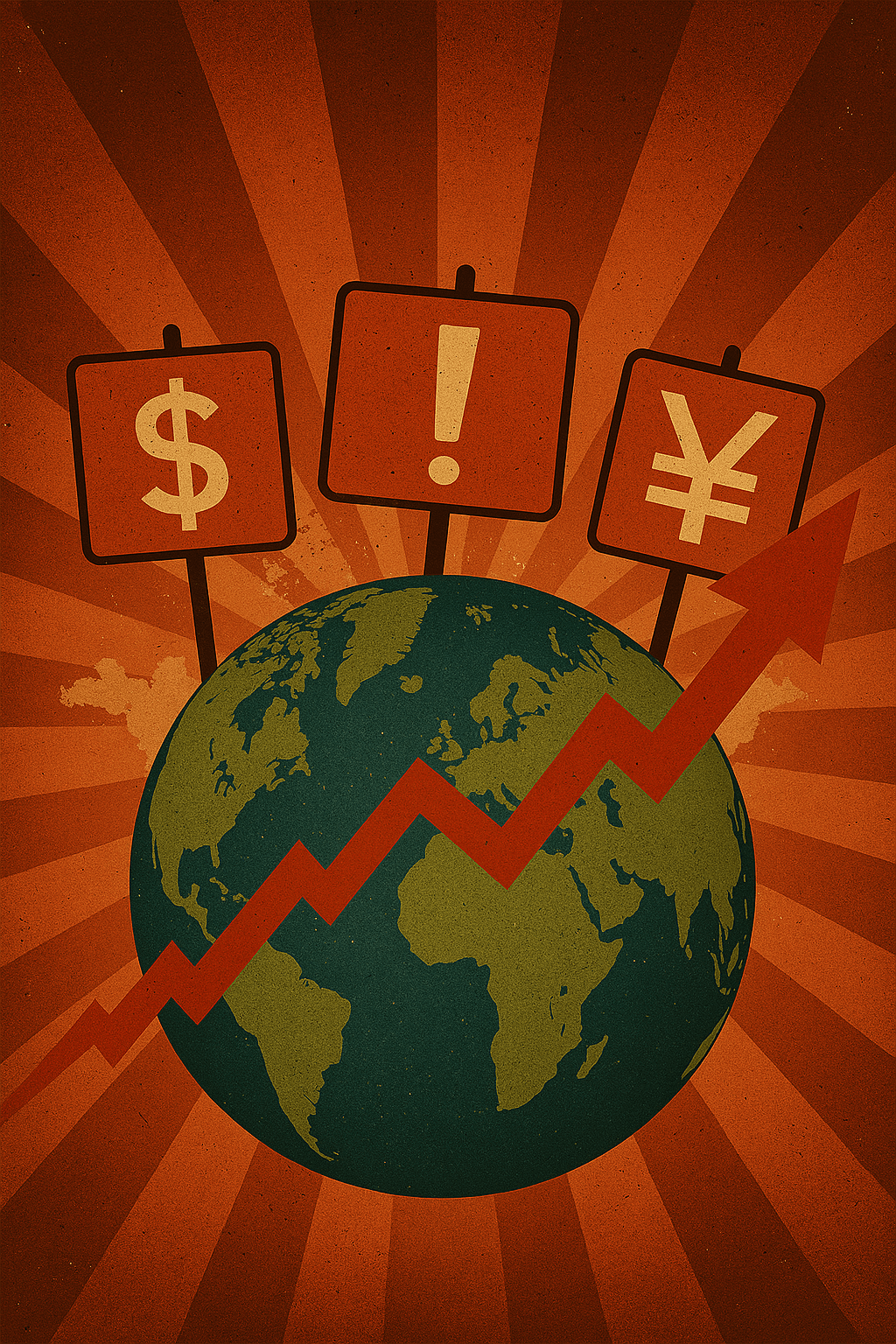
U.S. President Donald Trump announced sweeping new tariffs in early April 2025, reigniting global fears of a trade war. With a 10% baseline tariff on all imports and higher “reciprocal” rates—up to 54% on China and 20% on European Union (EU) goods—Trump’s policy aims to address trade imbalances and bolster American industry. However, the backlash has been immediate and intense. World leaders, markets, and economists are warning of serious consequences for the global economy, echoing concerns not heard since the 1930s.
The Policy Shift: Context and Tariff Details
On April 2, 2025, President Trump invoked the International Emergency Economic Powers Act (IEEPA) to implement:
- A 10% blanket tariff on all imports (effective April 5), and
- “Reciprocal tariffs” targeting countries with large trade surpluses with the U.S. (effective April 9).
Countries affected include:
- EU: 20%
- China: 54%
- South Korea: 25%
- India: 26%
- Japan: 24%
According to the White House, this action was taken to address “nonreciprocal treatment” and protect the U.S. economy under national emergency powers.
Global Reactions: Allies and Rivals Push Back
European Union (EU)
The EU’s response has been forceful:
- French President Emmanuel Macron urged European firms to suspend U.S. investments, labeling the tariffs “brutal and unfounded.”
- European Commission President Ursula von der Leyen called the move a “major blow to the world economy.”
- The EU is preparing €26 billion in retaliatory tariffs and may restrict U.S. tech firms’ access to European markets under its Anti-Coercion Instrument.
China
Facing the highest tariff rate, China swiftly retaliated:
- Announced export restrictions on rare earth elements, key to global tech supply chains.
- Warned of a prolonged trade standoff if the U.S. does not reverse course.
Canada and Japan
- Canada reactivated $20.6 billion in retaliatory tariffs.
- Japan’s Prime Minister Shigeru Ishiba declared the tariffs a “national crisis” and is exploring WTO options.
Other Countries
- India and South Korea are preparing diplomatic and trade responses, amid warnings of supply chain disruptions.
Economic Fallout: Domestic and Global Risks
Economists warn that the 2025 tariff package could have widespread economic repercussions:
U.S. Economy
- Tax Foundation projects the average U.S. household will face $2,100 in added costs, the largest tax hike since 1982.
- Ernie Tedeschi of Yale Budget Lab predicts the tariffs could halve U.S. GDP growth in 2025.
- Mark Zandi from Moody’s called it a “lose-lose,” emphasizing job losses and inflationary pressures.
Global Markets
- IMF expects to revise its 3.3% global growth forecast downward.
- Asian economies, heavily reliant on U.S. demand, may be disproportionately affected.
- EU exports could shrink by up to $209 billion, according to Frontier Economics.
- ECB warns of a 0.3–0.5% hit to eurozone growth.
Stock Market Impact
- The S&P 500 plunged nearly 5% on April 3—its worst day since the COVID-19 recovery dip in 2020.
- JP Morgan raised its U.S. recession odds to 60% by year-end.
Critical Analysis: Trade Strategy or Policy Misfire?
Is This Smoot-Hawley 2.0?
Many analysts see historical parallels with the Smoot-Hawley Tariff Act (1930), which worsened the Great Depression by triggering retaliatory trade barriers. Douglas Irwin, a leading historian on trade policy, warned that Trump’s strategy could replicate those damaging effects.
Modern Counterpoints
However, others argue the comparison is flawed. Unlike 1930, today’s global supply chains and services sectors are deeply integrated. Yet that also means tariffs on intermediate goods could disrupt domestic manufacturing and inflate production costs, harming the very industries they aim to protect.
Divergent Views
- Şebnem Kalemli-Özcan of Brown University highlighted that the tariffs will “hurt American consumers most.”
- Michael Lind, however, defends selective tariffs as tools for strategic leverage—though this view is in the minority.
Visual Overview: Tariff Rates and Responses
| Country/Region | Tariff Rate | Response/Notes |
|---|---|---|
| European Union | 20% | Investment freeze calls, €26B in countermeasures |
| China | 54% | Rare earth export controls, high-level warnings |
| Canada | 25% (existing) | $20.6B in retaliatory tariffs |
| Japan | 24% | Declared “national crisis,” WTO discussions |
| South Korea | 25% | Preparing countermeasures |
| India | 26% | Assessing trade negotiation options |
 GeoWire
Leave a comment