
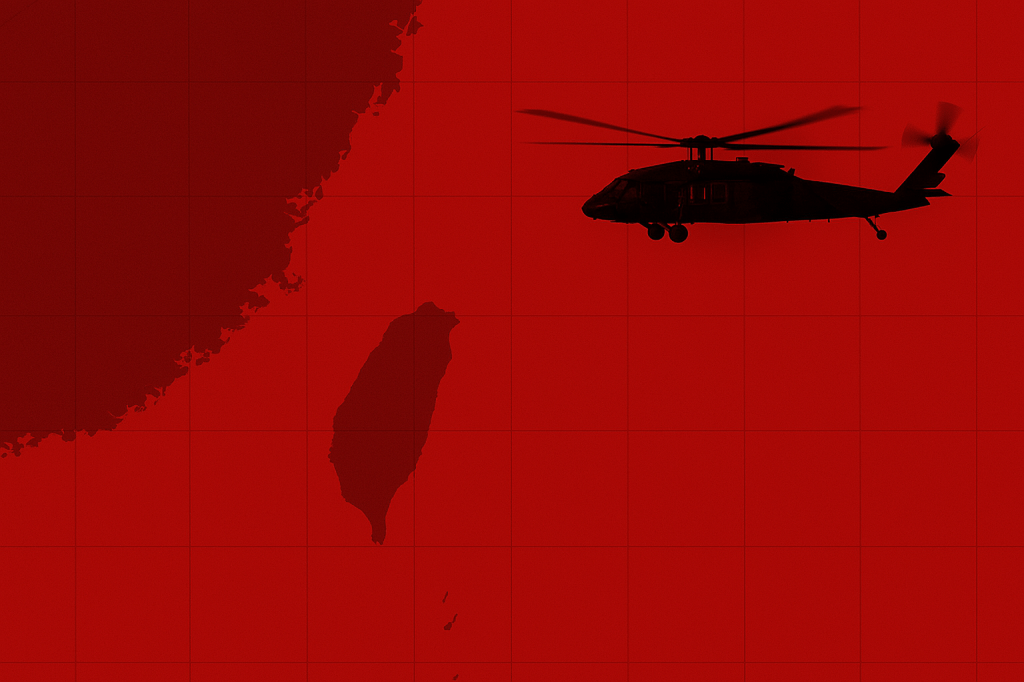
On March 31 and April 1, 2025, China launched a large-scale military exercise, code-named Strait Thunder-2025A, surrounding Taiwan with a show of force aimed at deterring what it calls “separatist forces.” These exercises, unprecedented in intensity and coordination, were seen as both a reaction to rising U.S.-Taiwan defense ties and a signal to domestic and international audiences. As tensions in the Taiwan Strait spike once again, these drills underscore the increasingly volatile contest for influence in the Indo-Pacific region.
The Drills: Scale and Strategy
The People’s Liberation Army (PLA) deployed over 70 aircraft, 13 naval vessels including the Shandong aircraft carrier, and live-fire operations simulating strikes on strategic infrastructure like ports and energy hubs. On April 1, Taiwan detected 76 Chinese aircraft, marking the largest such activity since the October 2024 Joint Sword drills. Conducted across the north, south, and east of Taiwan, the drills represented a full-spectrum simulation of a potential blockade and amphibious strike.
Beijing claimed the drills were a “stern warning” to Taiwan’s leadership and external powers. China’s Eastern Theatre Command emphasized joint force readiness, highlighting the PLA’s growing capacity for integrated operations. While framed as a routine military maneuver, the messaging and targets clearly aligned with real-world conflict scenarios.
Strategic Timing and Triggers
The timing of the exercise was no accident. Just days prior, U.S. Defense Secretary Pete Hegseth toured the region, reaffirming American support for Taiwan and announcing upgraded military command structures in Japan. China’s drills were thus not only a response to perceived provocations but also a test of U.S. resolve and Taiwan’s preparedness.
This mirrors past behavior—such as the Joint Sword-2024A drills following Taiwanese President Lai Ching-te’s inauguration—where political milestones and international statements triggered rapid military responses. China is using these opportunities not just to rehearse strategy but also to signal red lines.
Taiwan’s Response: Caution and Confidence
Taiwan acted swiftly. It activated its missile defense systems, deployed warships and aircraft, and launched a two-day rapid response exercise. Taiwanese leadership condemned the drills as provocative and dangerous, rejecting Beijing’s sovereignty claims.
Crucially, Taiwan framed its response as both defensive and responsible. It did not escalate beyond necessary measures, opting to demonstrate readiness without inviting further conflict—an approach designed to reassure allies and highlight China’s aggressive posture.
International Reactions: Words of Support, Limits of Action
The U.S. response followed a familiar script: concern, condemnation, and reaffirmation of support for Taiwan’s self-defense. Statements from the White House and the American Institute in Taiwan (AIT) echoed alarm over China’s “intimidation tactics.” Yet, beyond diplomatic rhetoric and ongoing military presence, the U.S. faces limits in deterring China without escalating into direct confrontation.
Japan, a key U.S. ally, has grown increasingly vocal about Indo-Pacific security, while ASEAN countries have remained largely silent—reflecting their cautious balancing between economic ties with China and regional stability.
Critical Analysis: Rehearsal, Rhetoric, or Real Threat?
While these drills are not unprecedented, their scale, timing, and messaging reflect a shifting strategic doctrine. No longer confined to symbolic displays, China is clearly normalizing the use of military exercises as coercive diplomacy. This reflects a broader trend of hybrid signaling—military, economic, and psychological—to pressure Taiwan while probing international thresholds.
Critically, these exercises also expose Beijing’s need to balance deterrence with plausible deniability. Live-fire drills simulate conflict without crossing the line into direct hostilities. This “gray zone” strategy allows China to escalate incrementally while blaming the West for rising tensions.
From the U.S. side, while diplomatic statements reaffirm the Rules-Based Order (RBO), the credibility gap between rhetoric and regional engagement remains. Taiwan remains heavily dependent on asymmetric capabilities and alliance support, both of which could be tested under sustained pressure.
Implications for Regional Security
These drills reinforce a troubling trajectory: normalization of high-intensity military maneuvers near Taiwan, strategic unpredictability in the Indo-Pacific, and rising risks of accidental escalation. Taiwan remains in the crosshairs not just militarily, but ideologically—an unwilling test case for China’s great power ambitions and the West’s deterrence architecture.
Future drills are likely, especially as Taiwan deepens ties with the U.S. and Japan. Meanwhile, ASEAN’s muted response and the erosion of non-alignment further complicate efforts to build a cohesive regional security framework.
Conclusion
Strait Thunder-2025A marks not just another episode in the Taiwan Strait’s long history of tension, but a strategic inflection point. With U.S.-China rivalry sharpening, Taiwan is increasingly the frontline of a broader contest over order, sovereignty, and influence in Asia.
The critical question remains: Can deterrence, diplomacy, and dialogue prevent war in a region being armed for it?
 GeoWire
Leave a comment