
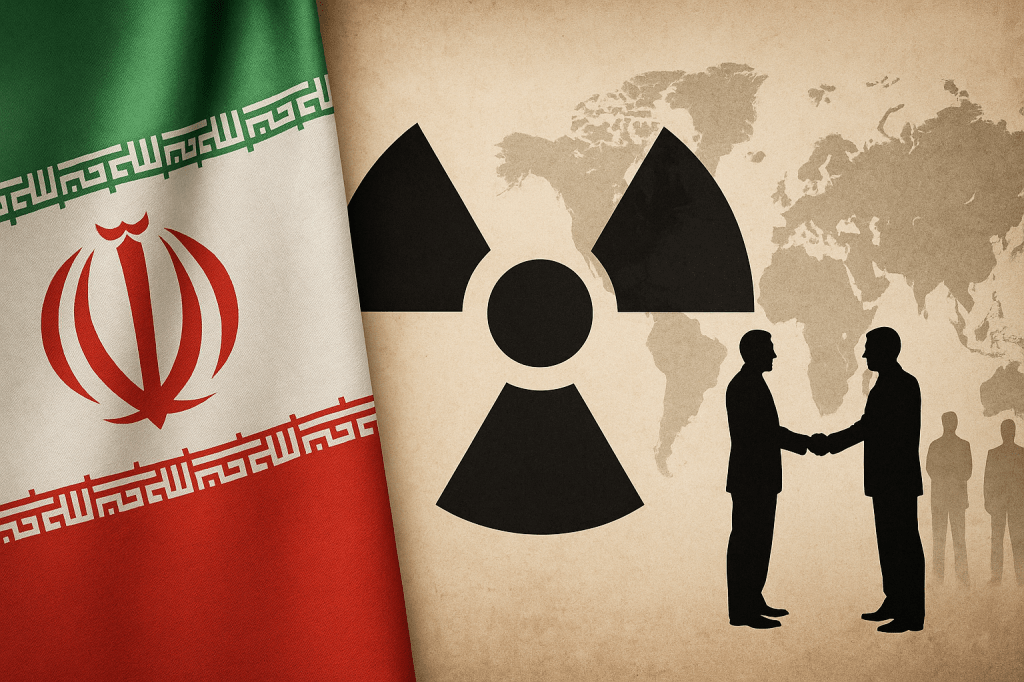
As of June 2025, talks between the United States and Iran over Iran’s nuclear programme have hit another roadblock—something that’s become all too familiar over the years. The newest effort, known as the 2025 Iran Nuclear Proposal, aims to place limits on Iran’s nuclear activities while trying to ease tensions in the region. But with both countries stuck in their old ways of distrust and strategic concerns, it’s clear that finding common ground won’t be easy.
Context and Background
This new proposal comes after the collapse of the 2015 nuclear deal (JCPOA), which the U.S. pulled out of in 2018 under President Trump. Since then, Iran has increased its uranium enrichment to 60%, which is very close to the 90% needed for a nuclear weapon. To restart talks, the Trump administration—now back in office—introduced a new version of the deal in early 2025. There have been five rounds of talks so far, held in Muscat and Rome, with help from Oman.
Overview of the 2025 Proposal
The new U.S. plan, led by Special Envoy Steve Witkoff, would let Iran continue low-level uranium enrichment (up to 3%) for now—just enough for civilian energy use. The main goals of the proposal are:
- Set up a shared nuclear enrichment centre involving the U.S., Saudi Arabia, UAE, and maybe Qatar, based on neutral ground like an island in Oman or Saudi Arabia.
- Once that centre is running, Iran would have to stop all enrichment inside its own country.
- The U.S. would help build nuclear power plants in Iran to meet its energy needs.
- Some sanctions relief would be given, but the plan doesn’t say exactly when or which ones.
Although it’s presented as a way to work together, the biggest demand—that Iran must stop enriching uranium at home—goes against what Iran sees as a matter of national pride and security.
Iran’s Rejection: Self-Reliance is Non-Negotiable
On June 4, 2025, Iran’s Supreme Leader Ayatollah Ali Khamenei rejected the U.S. proposal. He said uranium enrichment is a “red line” and essential to Iran’s belief in self-reliance (khod-kafa’i). Iran’s main reasons are:
- Right to Enrich: As part of the Nuclear Nonproliferation Treaty (NPT), Iran says it has the legal right to enrich uranium for peaceful use.
- No Outside Control: Iran won’t accept a foreign-based enrichment centre. Instead, it suggested locations like Kish or Qeshm islands within its own territory and rejected any disputed areas like Abu Musa or the Tunbs.
- Clear Sanctions Relief: Iran wants a clear, step-by-step plan to lift sanctions, especially on banking, oil, and its uranium stockpile.
- Economic Pressure: With ongoing economic problems, energy shortages, and regional losses, Iran wants to keep talks going—but without giving up its right to enrich.
Even though some hardliners oppose the talks, Khamenei is willing to continue negotiations to avoid UN sanctions coming back in October 2025 and to stop a possible Israeli military strike.
U.S. Position: No Enrichment Allowed
President Trump’s government is sticking to its “maximum pressure” policy—using tough sanctions and military threats. On June 2, 2025, Trump posted on X: “We will not allow any uranium enrichment!”—making it clear that the U.S. won’t compromise on this issue.
The U.S. sees the proposal as a small chance to let Iran keep peaceful nuclear energy, without letting it get close to building a bomb. But by not clearly promising when or how sanctions will be lifted, the U.S. has ignored one of Iran’s key demands. This makes Iran worry that the U.S. might break its word again—just like it did in 2018 when it left the earlier nuclear deal.
Stalemate as of June 5, 2025
Talks are stuck. Iran has added new advanced centrifuges, going even further beyond the limits of the old 2015 nuclear deal. At the same time, the U.S. is firm that any new deal must end Iran’s uranium enrichment for good.
Even the idea of a shared enrichment centre—meant to be a middle ground—has become a point of conflict. The U.S. wants it built in the Arab Gulf or a neutral location. But Iran insists it must be on its own land to protect its control and sovereignty.
Regional and Strategic Implications
- Gulf Arab States: Countries like Saudi Arabia and the UAE, though once hostile toward Iran, are now part of the proposed deal. Still, they don’t fully trust Iran and remain cautious.
- Israel: Israel is on high alert and may take military action if talks break down, which could lead to serious conflict.
- IAEA and the West: Iran’s growing uranium stockpile is a major concern. If turned into weapons, it could make several nuclear bombs. The UN’s nuclear agency (IAEA) and Western countries are calling for more access and openness from Iran.
Summary of Positions
| Aspect | United States | Iran |
|---|---|---|
| Uranium Enrichment | Temporary 3% allowed, eventual full cessation required | Right to domestic enrichment under NPT |
| Consortium Location | Gulf island outside Iran, e.g., Oman or Saudi Arabia | Must be on Iranian territory (Kish or Qeshm) |
| Sanctions Relief | Vague, tied to compliance | Demands immediate and comprehensive relief |
| Strategic Objective | Prevent nuclear weaponisation, ensure regional stability | Maintain nuclear self-sufficiency and national pride |
| Negotiation Strategy | “Maximum pressure” and threat of force | Negotiations to delay sanctions, retain sovereignty |
Conclusion: A Tough Road Ahead
The 2025 proposal shows how hard it is to balance stopping nuclear weapons and respecting a country’s independence. The U.S. doesn’t trust Iran because of its past nuclear activity, while Iran doesn’t trust the U.S. after the 2018 deal collapse. With a key UN deadline coming in October, it’s unclear if both sides will find common ground—or repeat the same mistakes.
If talks fail, the region could face more than just nuclear tension—it could head toward fresh conflict.
 GeoWire
Leave a comment