
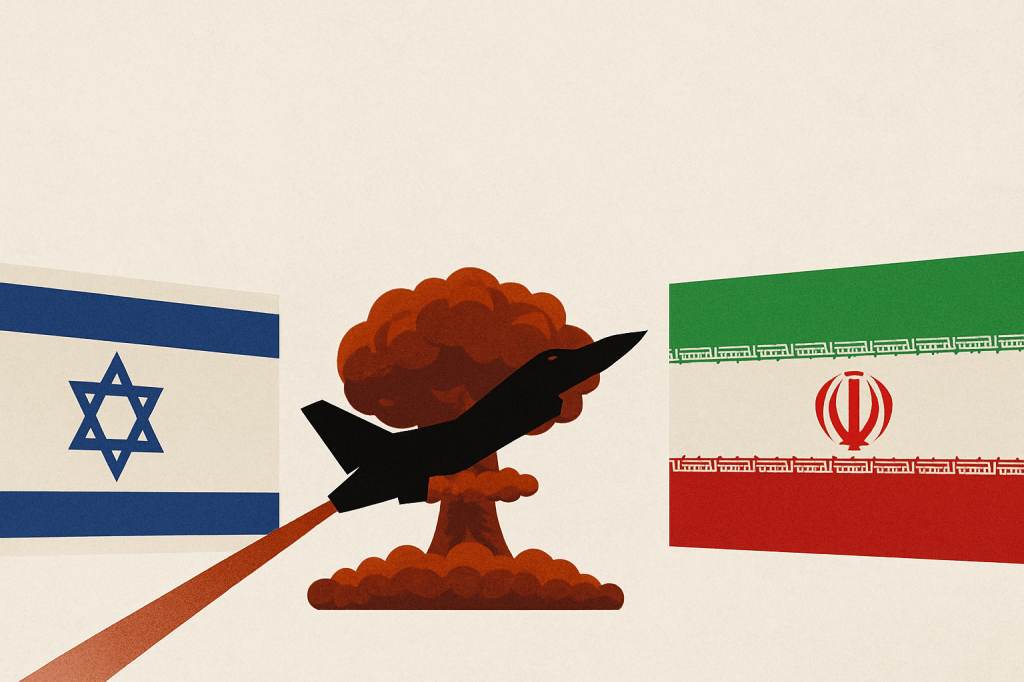
As of May 2025, tensions between Israel and Iran have surged to unprecedented levels, largely centred on Iran’s nuclear programme and Israel’s strategic red lines. Recent U.S. intelligence reports indicate that Israel is preparing for a potential strike on Iran’s nuclear facilities, while parallel diplomatic efforts led by the United States are attempting to forestall conflict. These developments raise critical questions about the efficacy of diplomacy, the implications of military escalation, and the broader strategic calculations of both nations.
Historical Context: The Begin Doctrine and Precedents
Israel’s current posture is rooted in the Begin Doctrine, a strategic policy that emerged in the early 1980s under Prime Minister Menachem Begin. This doctrine established that Israel would not permit hostile regimes to acquire nuclear weapons. It was first operationalised in 1981 when Israel bombed Iraq’s Osirak nuclear reactor, and again in 2007 with the destruction of a suspected nuclear site in Syria. These preemptive actions were guided by the imperative to neutralise existential threats. Today, Israel views Iran’s nuclear trajectory through the same lens, albeit with the understanding that Iran’s programme is more sophisticated, fortified, and dispersed.
Israel’s Strategic Calculus
For Israeli policymakers, a nuclear-capable Iran represents an existential threat. Iran’s long-standing antagonism, sponsorship of militant groups like Hezbollah, and its advanced missile capabilities intensify these concerns. Israel’s strategy revolves around multiple pathways: military preparedness, diplomatic engagement, covert operations, and deterrence. While Israel has reportedly enhanced its strike capabilities, including acquiring advanced aircraft and conducting long-range drills, officials acknowledge the complexity of neutralising Iran’s nuclear infrastructure in its entirety. Nevertheless, the perceived failure of diplomacy and the narrowing window for action are compelling Israeli leaders to weigh a preemptive strike more seriously.
Iran’s Position and Capabilities
Iran, for its part, asserts that its nuclear programme is peaceful and within its sovereign rights under the Non-Proliferation Treaty. However, its enrichment activities, particularly the production of uranium at 60% purity, suggest proximity to weapons-grade capability. Iran’s strategic doctrine integrates nuclear advancement with regional influence, fortified through partnerships with groups in Lebanon, Syria, Iraq, and Yemen. Its alignment with Russia, particularly in the wake of the Ukraine war, has also strengthened Tehran’s geopolitical standing. These alliances, combined with an increasingly resilient economy and military, contribute to Iran’s confidence in resisting Western pressure.
Diplomatic Efforts and the Role of the United States
The United States, under President Donald Trump, is engaged in an urgent diplomatic push to reach a new nuclear accord with Iran. Trump’s approach blends negotiation with coercive diplomacy, setting tight deadlines for Iranian compliance while signalling readiness for military alternatives. Iran, however, remains reluctant to accept demands such as zero uranium enrichment, framing them as infringements on its sovereignty. Israel has expressed scepticism regarding any deal that fails to dismantle Iran’s nuclear capability and remains poised to act unilaterally if it perceives diplomatic outcomes as inadequate.
Strategic Options: A Comparative Overview
Israel faces several strategic options:
- Preemptive Airstrike: Could delay Iran’s nuclear progress but risks triggering a broad regional war.
- Covert Sabotage: Offers deniability and minimal escalation but may only provide short-term gains.
- Diplomatic Pressure: Relies on international coordination but has so far proven insufficient.
- Deterrence: Involves accepting a nuclear-threshold Iran while bolstering defence systems, though politically undesirable in Israel.
Iran’s options include:
- Accelerating Nuclear Development: Aimed at strategic deterrence but could provoke immediate military action.
- Negotiating a Compromise: May ease sanctions but risks internal political backlash.
- Fortifying Defences and Alliances: Enhances resilience but escalates arms race perceptions.
- Asymmetric Retaliation: Utilising proxy forces to deter aggression, but at the cost of regional stability.
Pros and Cons of a Preemptive Strike
A preemptive Israeli strike could significantly delay Iran’s nuclear capabilities and reaffirm Israel’s deterrent posture. However, it also carries high risks: Iranian retaliation via missile attacks, Hezbollah’s involvement, and broader regional destabilisation. Economically, global oil markets could be severely disrupted, especially if Iran threatens maritime routes like the Strait of Hormuz. Diplomatically, Israel could face criticism even from allies if the strike appears premature or disproportionate.
Global and Regional Implications
An Israeli strike and ensuing Iranian retaliation would have cascading effects across the Middle East. U.S. forces in the region could be targeted, drawing Washington into a direct conflict. Oil prices would likely surge, impacting global economies. Moreover, such a confrontation could polarise international alliances further, deepening divides between Western powers and the Russia-China-Iran axis. It may also embolden Iran to fully pursue nuclear weapons, believing that only a bomb guarantees regime survival.
References
- https://www.reuters.com/world/middle-east/us-intel-suggests-israel-preparing-strike-irans-nuclear-facilities-cnn-reports-2025-05-20/#:~:text=May%2020%20%28Reuters%29%20,officials%20familiar%20with%20the%20intelligence
- https://www.timesofisrael.com/new-us-intel-suggests-israel-readying-to-strike-iranian-nuclear-facilities-report/#:~:text=The%20report%20also%20cited%20a,that%20is%20unacceptable%20to%20Jerusalem
- https://www.jpost.com/opinion/article-850524
- https://www.timesofisrael.com/liveblog_entry/khamenei-trump-lied-when-he-said-he-wants-peace-israel-cancerous-tumor-in-region/#:~:text=Khamenei%20also%20says%20that%20Israel,region%E2%80%9D%20that%20must%20be%20uprooted
- https://www.timesofisrael.com/new-us-intel-suggests-israel-readying-to-strike-iranian-nuclear-facilities-report/#:~:text=The%20report%20also%20cited%20a,that%20is%20unacceptable%20to%20Jerusalem
- https://theiranpost.com/israel-prepares-for-iran-missile-strike/#:~:text=The%20Israeli%20Air%20Force%20has,defense%20infrastructure%2C%20Israeli%20media%20reported
- https://theiranpost.com/trump-wants-iran-deal-but-will-be-leading-the-pack-for-war-without-one/#:~:text=Iran%2C%20and%20much%20more%20inclined,Tehran%20never%20gets%20a%20bomb

 GeoWire
Leave a comment