
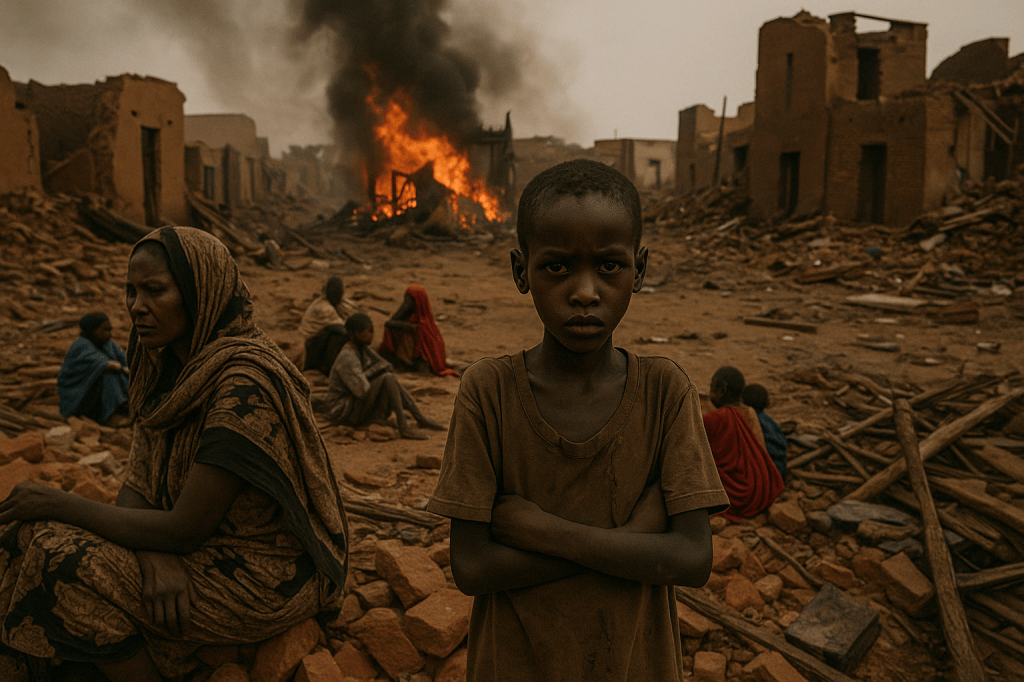
“As the world watches Gaza and Ukraine, Sudan bleeds in the shadows.“
Sudan is experiencing a catastrophe of unprecedented proportions—one that the world cannot afford to ignore. Since April 2023, a brutal civil war between the Sudanese Armed Forces (SAF) and the paramilitary Rapid Support Forces (RSF) has plunged the nation into chaos. The conflict has displaced millions, decimated infrastructure, and created the world’s worst hunger and displacement crisis. Yet, it remains largely invisible on the global stage, overshadowed by conflicts in Ukraine and Gaza. This article explores the origins, evolution, and humanitarian toll of Sudan’s civil war—calling for urgent international action before an entire generation is lost.
How Did It Begin?
Sudan’s modern history is riddled with instability: since independence in 1956, the country has witnessed more coup attempts than any other in Africa. The RSF, led by General Mohamed Hamdan Dagalo (Hemedti), emerged from the Janjaweed militias infamous for atrocities during the Darfur genocide. Tensions exploded in April 2023 following disputes over integrating the RSF into the SAF, commanded by General Abdel Fattah al-Burhan.
What began as a power struggle in Khartoum soon spiralled into full-scale war, spreading across regions already reeling from ethnic violence and economic decay. In Darfur, the RSF has been accused of ethnic cleansing against non-Arab groups like the Masalit, reviving horrors of the early 2000s. With backing from foreign actors and no political roadmap in sight, the war continues to deepen.
Where Do Things Stand in 2025?
Two years in, Sudan’s war shows no sign of abating. The SAF and RSF remain locked in a deadly stalemate, each claiming control over key areas while civilians bear the brunt. In Darfur, atrocities have escalated—El Geneina alone saw up to 15,000 people killed. The RSF’s massacre in Gezira State in October 2024 marked the deadliest month of the war.
Despite sporadic UN-led mediation, including efforts by envoy Ramtane Lamamra, neither side is willing to negotiate. The SAF has regained territory in Sennar and Gezira, but the RSF still holds parts of Khartoum and besieges El-Fasher. With an estimated death toll reaching 150,000 and no verified figures due to restricted access, the human cost is staggering.
A Humanitarian Calamity
Sudan’s war has unleashed the worst humanitarian crisis globally. The numbers are sobering:
- 12.6 million people displaced, including 8.6 million internally and nearly 4 million refugees abroad—surpassing any current conflict.
- 24.6 million people face acute food insecurity, with over 600,000 in famine conditions.
- 70–80% of hospitals are non-functional, leaving millions without care amid outbreaks of cholera and malnutrition.
- 17 million children are out of school, risking a lost generation.
- Over 12.2 million women and children are at heightened risk of sexual and gender-based violence.
In famine-struck areas like North Darfur’s Zamzam and the Western Nuba Mountains, children are dying quietly, far from the cameras and headlines that flood other war zones.
The Aid Effort—and Its Limits
While humanitarian agencies are working heroically, the response is nowhere near sufficient. The UN has appealed for $4.2 billion to assist over 20 million people, yet only a fraction of this has been pledged. Aid workers face constant risks—over 110 have been killed or abducted—and access to hard-hit areas like South Kordofan and Darfur is routinely blocked.
Despite these hurdles, the World Food Programme has reached over 13 million people. The Scottish Government recently contributed £375,000 in emergency aid. But these gestures are dwarfed by the scale of need. Bureaucratic barriers and attacks on aid convoys continue to hamper life-saving efforts.
Why the Silence?
Sudan’s suffering has been largely absent from international headlines. With media and diplomatic focus on Gaza and Ukraine, Sudan rarely receives more than a passing mention. Unlike these conflicts, Sudan holds little strategic importance to global powers, limiting political urgency. The country’s internal complexity and reporting restrictions further compound the problem, allowing mass atrocities to unfold beyond public awareness.
What’s at Stake?
The crisis in Sudan is not only a human tragedy—it is a threat to regional stability. Neighbouring countries like Chad and South Sudan are overwhelmed by refugee flows, while famine looms across large parts of the Sahel. With climate change intensifying and Sudan’s economy in freefall, the risk of a prolonged collapse is high.
If the war continues unchecked, tens of thousands more will die—not just from bullets, but from starvation, disease, and neglect. The ripple effects could destabilise the Horn of Africa for years to come.
 GeoWire
Leave a comment