
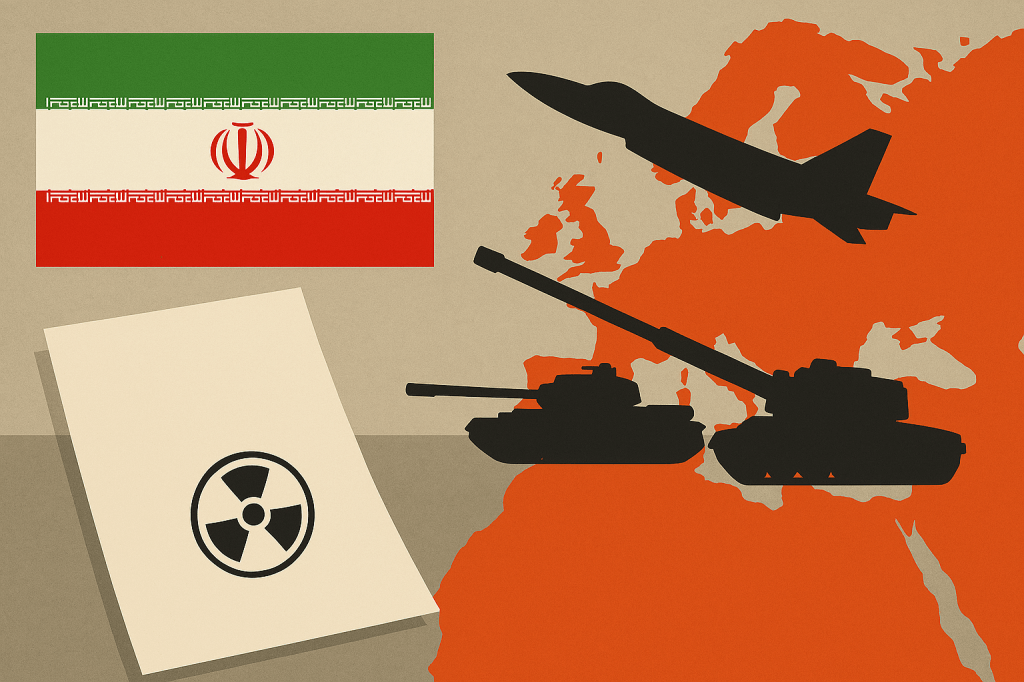
On April 2, 2025, France’s Foreign Minister Jean-Noël Barrot made a strong warning: a military conflict with Iran seems “almost inevitable” if a new nuclear deal is not reached soon. This warning comes as the world watches Iran’s growing nuclear activities, while key sanctions under the 2015 nuclear deal (JCPOA) are set to end in October 2025. France’s message is clear—without urgent talks and compromise, the world may be heading toward another war in the Middle East.
What Is the JCPOA and Why It Matters
The Joint Comprehensive Plan of Action (JCPOA) was signed in 2015 between Iran and major powers, including the U.S., to stop Iran from building nuclear weapons. In return, many international sanctions on Iran were lifted.
However, in 2018, the U.S. left the deal under President Donald Trump, and since then, Iran has slowly stopped following the agreement. It has increased its uranium enrichment to levels close to what is needed for a nuclear bomb. A February 2025 report by the International Atomic Energy Agency (IAEA) confirmed this worrying trend.
Key parts of the JCPOA, including U.N. sanctions, are due to expire in October 2025. European countries are racing against time to stop Iran from crossing the nuclear line.
Where the Main Countries Stand
France and Europe
France, along with Germany and the UK (known as the E3), wants to avoid war. They are pushing hard to bring Iran back to the negotiating table and hope to sign a new deal by August 2025. France believes that if talks fail, the U.S. or Israel might strike Iran’s nuclear sites, leading to a wider war in the Middle East.
United States
Under President Trump, the U.S. has taken a tough stance called “maximum pressure.” This includes heavy economic sanctions and threats of military strikes. Trump has warned that if Iran does not agree to a deal, the U.S. may bomb its nuclear facilities. He also warned countries like China that buying oil from Iran could bring penalties. However, the U.S. has said it is still open to making a deal—if Iran is willing.
Iran
Iran refuses to talk directly to the U.S. but is open to indirect talks through countries like Oman. President Masoud Pezeshkian said on March 30, 2025, that Iran prefers indirect talks. However, Iran’s Supreme Leader, Ayatollah Khamenei, is doubtful about making any deal with the U.S. Iran claims its nuclear program is peaceful, but its actions—like speeding up uranium enrichment—raise global concerns.
Israel
Israel sees Iran’s nuclear activities as a major threat. It has already conducted joint air drills with the U.S. and may be preparing for a military strike. Israel believes Iran is not just a threat because of its nuclear program, but also because of the support it gives to groups like Hezbollah, Hamas, and the Houthis, who have launched attacks on Israel.
What Experts and the Public Are Saying
There is no agreement among experts or the public. Some think that only military action will stop Iran, while others warn that war would bring global economic problems and make the Middle East even more unstable.
A report by the Arms Control Association in March 2025 said that if there is no deal by summer, Europe may bring back U.N. sanctions, which could make the situation worse. On social media, users are also divided. Some worry that any military strike could lead to a full war, while others believe that force is the only way to stop Iran.
What Could Happen Next
Time is running out. France’s warning shows how serious the situation has become. The October 2025 deadline is key—after that, Iran could legally expand its nuclear program without limits if no new agreement is signed.
Here’s a quick look at where the key players stand:
| Country/Group | What They Want | What They Are Doing |
|---|---|---|
| France & Europe | A peaceful deal to avoid war | Pushing for talks before August |
| United States | Stop Iran’s nuclear program | Using sanctions, military threats |
| Iran | Keep enriching uranium, no direct talks | Open to indirect talks, speeding up nuclear work |
| Israel | Stop Iran, even by force | Preparing for possible military strike |
| Experts & Public | Mixed views | Some support diplomacy, others support strikes |
Conclusion
France’s warning shows that the world is at a dangerous turning point. If a new nuclear deal is not made soon, the chance of war will grow. With the U.S. taking a hard line, Iran refusing direct talks, and Israel ready to act, the risk of conflict is rising.
 GeoWire
Leave a comment