
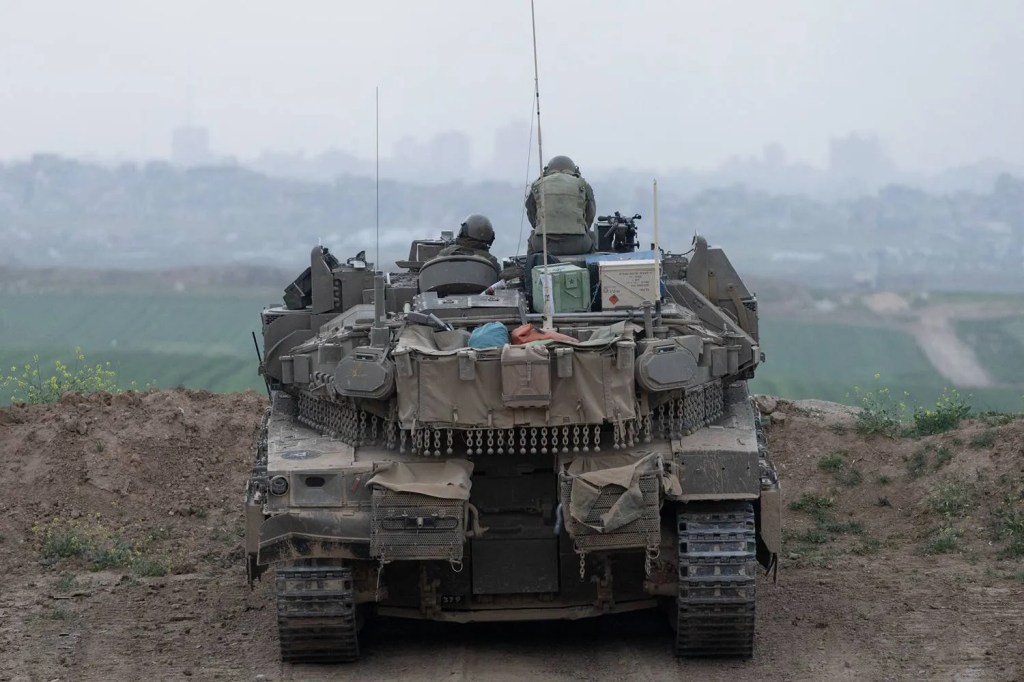
A Ceasefire Written in Smoke
On January 19, 2025, a brief and fragile ceasefire between Israel and Hamas flickered into existence—only to dissolve weeks later in a firestorm of missiles, broken promises, and political maneuvering. While the world hoped for a reprieve, those who understood the political and military calculus on both sides knew: this ceasefire was never built to last.
What unfolded next—waves of airstrikes, resumed ground offensives, hundreds killed in a matter of hours—was not a surprise, but a painful confirmation that this was not peace, merely a pause before the next blow.
Ceasefire Agreement and Initial Phases
The agreement outlined a structured, multi-phase approach:
- First Phase: A 42-day period involving the release of 33 hostages held by Hamas in exchange for approximately 1,800 Palestinian prisoners. Concurrently, Israeli forces were to withdraw from densely populated areas in Gaza, facilitating the return of displaced Palestinians and the influx of humanitarian aid.
- Second Phase: Aimed at establishing a sustainable ceasefire and the complete withdrawal of Israeli forces from Gaza, contingent upon further negotiations.
- Third Phase: Focused on ending the conflict entirely and initiating reconstruction efforts in Gaza.
But the deal frayed midway through the first phase. Israel, under intense domestic pressure and political infighting, refused to enter Phase Two negotiations, blaming Hamas for delays and accusing it of preparing for new attacks, and these claims were denied by Hamas.
Ceasefire as a Tactical Pause—for Both Sides
Conventional wisdom warns that armed groups like Hamas often use ceasefires to regroup. But this war has flipped that idea on its head: Israel, with its vastly superior power, also used the ceasefire strategically—not to disarm, but to reposition militarily and politically.
- In Gaza, Israel continued low-intensity strikes, targeting supposed militant activity even during the truce.
- In the West Bank, settlement expansion and military raids continued unabated.
- In Lebanon and Syria, Israel intensified operations, floated plans for buffer zones, and spoke of demilitarizing southern Syria after Assad’s fall.
The ceasefire became a breathing space for Netanyahu’s government, not a step toward sustainable peace.
Netanyahu’s Dilemma: Hostages or Hardliners?
Prime Minister Benjamin Netanyahu was caught in a political trap:
- On one hand, hostage families demanded negotiations to bring their loved ones home.
- On the other, his far-right coalition partners threatened to bring down his government if he continued down the ceasefire path.
Faced with this tension, Netanyahu chose political survival:
- He walked away from the ceasefire.
- He launched new strikes across Gaza, re-igniting the war.
- In doing so, he regained support from far-right parties like Jewish Power and Religious Zionist Party.
Collapse and Renewed Hostilities
The ceasefire unraveled on March 18, 2025, when Israel launched extensive airstrikes across Gaza, resulting in significant casualties. Prime Minister Benjamin Netanyahu stated that these actions were a response to Hamas’s refusal to release remaining hostages and were “just the beginning” of renewed military operations. Hamas retaliated with rocket fire, further escalating the conflict.
International Mediation Efforts
In the wake of renewed violence, Egypt proposed a new ceasefire plan, suggesting the weekly release of five Israeli hostages by Hamas in exchange for Israel’s implementation of the second phase of the original agreement, including full military withdrawal from Gaza. While Hamas responded positively, Israel has yet to officially acknowledge the proposal, leading to continued uncertainty.
The Myth of a “Humanitarian Ceasefire”
Ceasefires are often seen as moral and humanitarian pauses. But this one was a tactical tool—a strangle contract, as Marika Sosnowski calls it—not a deal between equals.
- Israel, as the militarily dominant actor, dictated terms and timelines.
- Hamas, battered and isolated, had few real options.
- Meanwhile, humanitarian access, fuel, and food remained blockaded or severely restricted.
This wasn’t a truce; it was a militarized stalemate in disguise.
Disputed Hostage Terms and U.S. Mediation Fuel Ceasefire Collapse
According to statements from the Israeli government and the U.S. administration under President Trump, the primary justification for breaking the ceasefire was Hamas’ alleged refusal to release additional hostages as required under the second phase of the January 2025 ceasefire agreement.
Israel and the U.S. accused Hamas of:
- Rejecting new proposals for the next stage of the ceasefire (which Hamas said were different from what was initially agreed).
- Delaying or refusing the release of remaining hostages.
- Allegedly preparing new attacks (though no evidence was publicly provided by Israel for this claim).
However, Hamas denied these accusations, stating that:
- It was ready to begin serious talks for Phase 2 of the agreement, which involved more hostage releases and a full Israeli withdrawal.
- The new U.S. proposal presented by envoy Steve Witkoff deviated from the original deal, which led Hamas to push for a return to the January terms.
- They even offered to release an American-Israeli and return bodies of hostages to resume talks—an offer Israel dismissed as “psychological warfare.”
So, in short: Israel and the U.S. claimed Hamas violated or obstructed the deal, while Hamas argued that Israel reneged on agreed terms and imposed new conditions, stalling progress.
Conclusion: Ceasefires Don’t Work Without Addressing the Cause
The Israel-Hamas ceasefire was never about building peace. It was about managing optics, buying time, and appeasing domestic pressure. But in a war where the root causes—occupation, displacement, collective punishment—remain unaddressed, ceasefires cannot hold.
True peace demands more than hostage swaps or temporary silence. It requires political courage, accountability, and an end to treating civilian suffering as a bargaining chip.
Until then, every ceasefire will simply be the eye of the storm—not its end.
 GeoWire
Leave a comment