
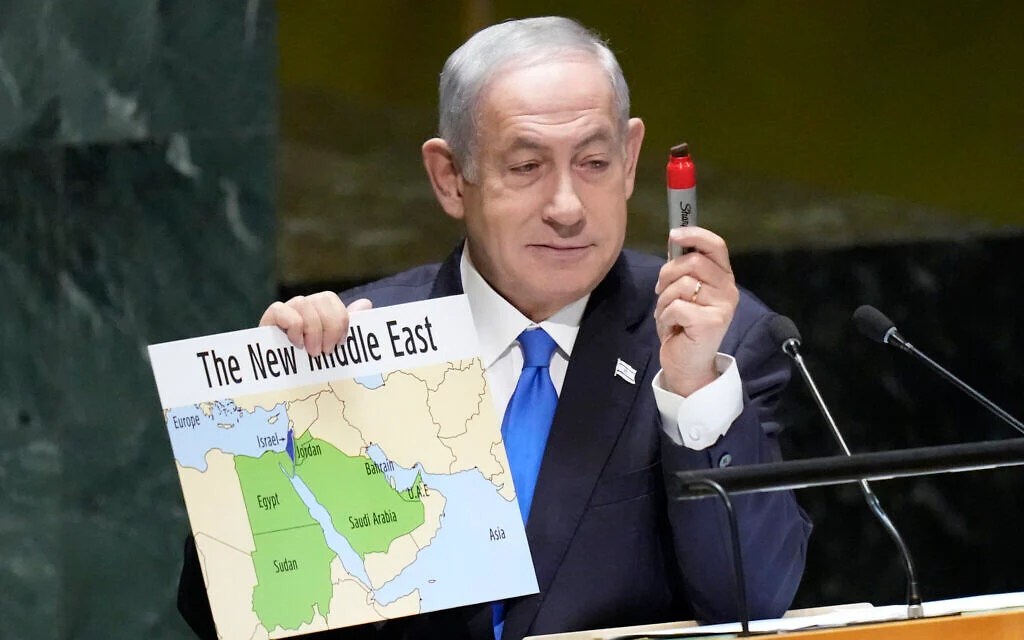
When Bashar al-Assad fell from power in December 2024, Syria’s political map didn’t just change—it cracked open, offering an unprecedented opportunity for Israel to reshape the terrain of its most volatile neighbor. For Prime Minister Benjamin Netanyahu, long known for his security-first approach to foreign policy, this moment marked more than just a regional shift. It marked the beginning of what could become Israel’s most significant strategic gain in his vision of a “New Middle East.”
A Window of Opportunity in Southern Syria
The Israeli government acted swiftly in the power vacuum left by Assad’s downfall. From reinforcing control over the Golan Heights to moving into the UN-monitored buffer zone and parts of southern Syria, the IDF established an extended presence along the northern border. Strategic locations like Mount Hermon were secured indefinitely under the banner of national defense. At the same time, Israel launched targeted airstrikes that reportedly destroyed nearly 70–80% of the Assad regime’s remaining military infrastructure within days of its collapse.
More than just military maneuvers, these moves are part of a broader Israeli effort to ensure the demilitarization of southern Syria. The goal is clear: prevent any future threats akin to Hezbollah’s entrenchment in Lebanon, and block groups like Hayat Tahrir al-Sham (HTS) from moving south. Simultaneously, Israel announced the expansion of settlements in the Golan Heights—signaling not just security interests, but a long-term strategic foothold.

Weakening the Axis of Resistance
One of the most immediate outcomes of Assad’s fall is the disruption of Iran’s so-called Axis of Resistance. With Syria as a key conduit for arms and logistical support from Tehran to Hezbollah, the regime’s collapse has fractured this critical supply route. It represents a strategic setback for Iran and a tangible security gain for Israel, reducing Tehran’s ability to project influence along Israel’s northern front. Reports also indicate that Iran is considering alternative methods, such as airborne routes, to continue supplying Hezbollah in Lebanon.
Israel has also capitalized on the chaos to eliminate remaining chemical weapons facilities and neutralize militia bases, making use of the security vacuum to target long-standing threats without international interference.
Beyond the Battlefield: Redrawing Alliances
Unexpectedly, the new dynamics in Syria have opened space for new regional alignments. Israel is reportedly exploring indirect engagement with Kurdish groups and the Syrian Democratic Forces (SDF) that may seek autonomy in a fragmented Syria. Such cooperation could create buffer zones and informal alliances that not only offer tactical advantages but also reshape Israel’s long-term regional posture.
Israel’s Foreign Minister Gideon Sa’ar has also suggested that Syria’s future may lie in being divided into smaller autonomous zones—each respecting different sectarian, ethnic, and political communities. This strategy could result in neutral or even friendly neighbors emerging from Syria’s ruins.
Risks and Complexities Ahead
Still, the path forward is not without risks. Groups like HTS, with jihadist ideologies, are gaining ground in parts of Syria, raising concerns about new extremist threats. Turkey is also seeking to expand its influence, potentially clashing with Israeli interests in northern Syria. Moreover, extended Israeli presence in Syrian territory could provoke international backlash or complicate relations with Russia, which continues to play a balancing role in the region.
Summary Tables
Key Israeli Actions Post-Assad:
| Action | Details |
|---|---|
| Military occupation | IDF moved from Golan Heights to buffer zone and southern Syria |
| Indefinite presence | IDF to remain at strategic Mount Hermon |
| Demilitarization demand | Call for removal of HTS and other militias from southern Syria |
| Airstrikes on military assets | Destroyed 70-80% of regime’s capabilities within 48 hours |
| Expansion of settlements | Settlements expanded in Golan Heights |
Strategic Benefits:
| Benefit | Description |
| Weakening Iran’s influence | Disrupted Axis of Resistance, cut Hezbollah supply lines |
| Enhanced border security | Demilitarized southern Syria, neutralized threats along northern frontier |
| Potential new alliances | Emerging cooperation with SDF, Kurdish groups |
| Fragmentation advantage | Support for splitting Syria into autonomous regions |
Conclusion
Syria’s collapse has handed Israel a rare strategic window—one that could shape not just its northern frontier, but the wider Middle East. With Iran weakened, Hezbollah isolated, and new partnerships on the horizon, Netanyahu’s vision of a transformed region is closer than ever to becoming reality. If managed effectively, Syria could indeed become Israel’s biggest strategic gain in this new regional order.
 GeoWire
Leave a comment