
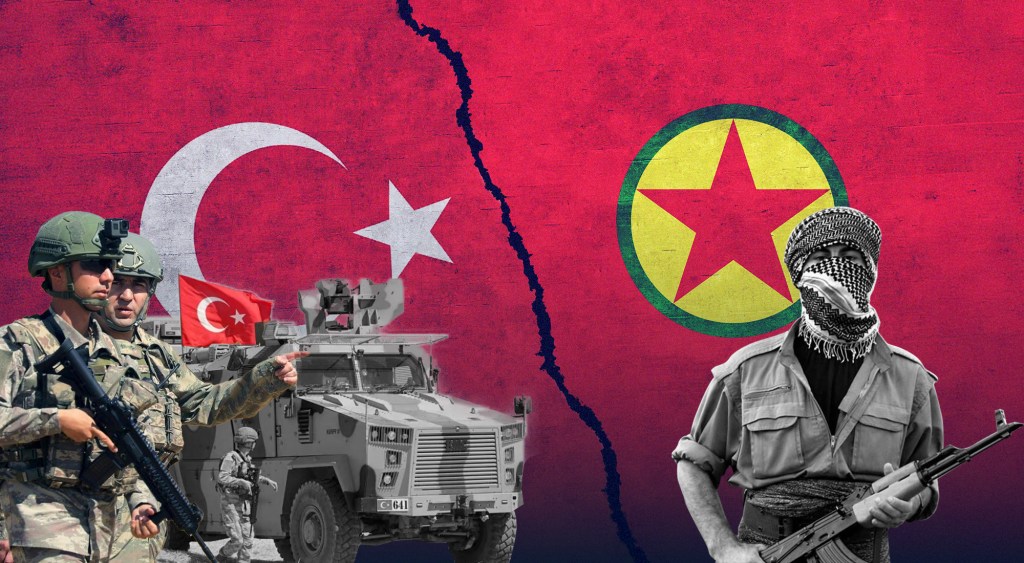
The conflict between Türkiye and the Kurdistan Workers’ Party (PKK) has been one of the most enduring and deadly in the region. Since 1984, the PKK—a group designated as a terrorist organization by Türkiye, the U.S., and the EU—has been involved in armed struggle, initially calling for an independent Kurdish state, later shifting its demands to political rights and autonomy.
Now, for the first time in years, a real shift may be happening.
On March 1, 2025, the PKK announced a unilateral ceasefire, following a public call to disarm by its jailed founder, Abdullah Öcalan. This comes after nearly a decade of renewed violence, with over 7,000 people killed since 2015, including civilians, Turkish security forces, and militants.
Why This Ceasefire Matters
Öcalan’s message, issued from his prison cell on İmralı Island, urged the PKK to “end armed struggle and take historical responsibility.” Two days later, PKK leaders in northern Iraq’s Qandil mountains announced the ceasefire, saying they would not engage unless attacked. This declaration could mark the beginning of a peaceful political transition—if both sides choose to act on it.
What This Means for Peace
For the PKK:
- A Path to Politics: Disarmament could pave the way for legal political participation through Kurdish parties like the DEM party, giving the movement a voice in Türkiye’s political system.
- Amnesties and Reintegration: PKK fighters not involved in violence could benefit from amnesty or reduced sentences, allowing for rehabilitation into civilian life.
- Safe Haven and Exit: Some leaders may seek asylum or political protection abroad, possibly hosted by friendly Kurdish factions in Iraq.
For Türkiye:
- Peace in the Southeast: After decades of unrest, southeastern Türkiye—home to a large Kurdish population—could finally see peace and development.
- Economic Growth & Trade: Stability could unlock major regional projects, like the Development Road, linking Türkiye to Iraq’s Grand Faw Port via rail and pipelines.
- Political Advantage: For President Erdoğan, the ceasefire could boost popularity among Kurdish voters and even pave the way for constitutional reforms—if trust is built.
Wider Regional & Global Impact
An often-overlooked aspect of this ceasefire is its potential impact on Kurdish forces in Syria, particularly the Syrian Democratic Forces (SDF)—a U.S.-backed group, Ankara views with suspicion due to its links to the PKK.
Although the SDF has said this ceasefire is “PKK-specific,” Turkish airstrikes near SDF-controlled areas suggest the regional dynamics are already shifting. The outcome could influence tensions in Syria and Iraq, or lead to renewed dialogue.
But There Are Big Challenges Ahead
- No Formal Talks Yet: Erdoğan welcomed the ceasefire but rejected official negotiations. Without a structured dialogue, the process may stall.
- Ongoing Crackdowns: Just days before the ceasefire, Türkiye arrested 282 people, including journalists, DEM party members, and academics, accusing them of PKK links—raising doubts about the government’s intentions.
- Öcalan’s Future: The PKK insists Öcalan should be released to personally guide the peace process, but this remains politically explosive in Türkiye.
- Regional Crossfire: Any progress must navigate the military complexities in Iraq and Syria, where Türkiye conducts airstrikes and maintains operations against PKK elements.
- Disarmament Logistics: Peace isn’t just a declaration—it requires practical steps: decommissioning weapons, setting up monitoring, and international support.
The Road Ahead
The ceasefire, if respected, could reshape the future of both Türkiye and the broader region. For the PKK, it’s a chance to step into politics instead of war. For Türkiye, it’s an opportunity to heal, rebuild, and lead with strength rooted in peace rather than military power.
But peace requires more than a statement—it needs trust, dialogue, and action. The coming time will be crucial in determining whether this historic opportunity leads to lasting peace—or slips away like those before it.
 GeoWire
Leave a comment