
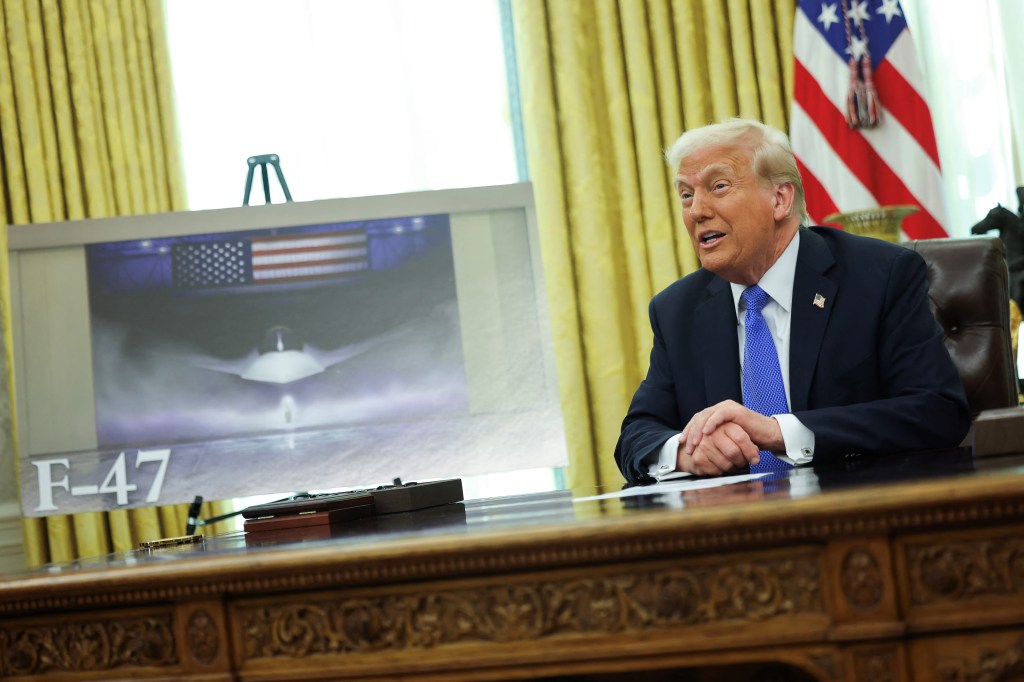
In a major move to boost U.S. air power and counter China’s military advancements, President Donald Trump has awarded aerospace giant Boeing a $20 billion contract to build the Air Force’s newest fighter jet—the F-47. The aircraft will be part of the Next Generation Air Dominance (NGAD) program and is expected to work alongside drones in future combat missions.
Trump made the announcement from the Oval Office, stating, “We’ve placed a big order. We can’t reveal the cost just yet.” He also added that U.S. allies have already shown interest in buying the jet.
This is a significant win for Boeing, especially after a rough few years marked by safety controversies, production issues, and financial losses. After the news broke, Boeing’s stock rose by nearly 5%, while rival Lockheed Martin—the maker of the F-22 and F-35—saw its shares drop by almost 7%, having lost the bid.
What Makes the F-47 Special?
While many details about the jet are still classified, it’s expected to include:
- Stealth capabilities
- Advanced AI and sensors
- Greater range and adaptability compared to older fighters like the F-22
According to Air Force Chief of Staff Gen. David Allvin, the F-47 will be more affordable, flexible, and better suited for future threats. It will also be easier to maintain than existing aircraft.
The F-47 is designed not just as a fighter but as a part of a broader system—working alongside uncrewed drones and other tech. The NGAD program it’s part of was created to give the U.S. an edge over rising threats from countries like China and Russia.
A Big Comeback for Boeing
Boeing has faced serious challenges in recent years, including production issues, a strike, and the grounding of its 737 MAX jets. The company reported an $11.8 billion loss in 2024, its worst in years.
This contract is a turning point, especially for Boeing’s defense wing based in St. Louis, Missouri, which builds military jets. Over time, the deal is expected to be worth hundreds of billions of dollars in orders as more jets are built and sold, both domestically and internationally.
What’s Next for Lockheed?
Lockheed Martin, long a dominant force in U.S. military aviation, is now facing a more uncertain future. After also losing the Navy’s next-gen stealth fighter bid, the company said it was “disappointed” but respected the decision. While they could technically challenge Boeing’s win, Trump’s high-profile announcement makes a formal protest less likely.
Concerns and Criticism
Some experts and lawmakers have called for strong oversight to ensure the project doesn’t face delays or cost overruns, especially given Boeing’s recent track record. Even Senator Mark Kelly, a former combat pilot, stressed the need for accountability.
Meanwhile, tech entrepreneur and presidential advisor Elon Musk has voiced doubts about investing in manned fighter jets at all, arguing that drones are the future of air combat.
Still, for Boeing, this deal marks a much-needed win and potentially repositions the company as a central player in shaping the future of American air power.
 GeoWire
Leave a comment