
Since the fall of Bashar al-Assad in December 2024, the political and security landscape of Syria has shifted dramatically. Amid the chaos, Israel has launched a series of military operations in southern Syria, citing growing threats and the need to secure its borders. This analysis breaks down Israel’s strategy, the timeline of its operations, the impact on the region, and how global powers are reacting.
Background: What Changed After Assad Fell?
The removal of Assad, driven by a coalition of rebel groups led by Hay’at Tahrir al-Sham (HTS), created a vacuum in Syria’s leadership. On January 29, 2025, Ahmed al-Sharaa was appointed as interim president to oversee a multi-year transition. While Syria began restructuring internally, Israel grew increasingly concerned about instability just across its northern border, particularly near the Golan Heights, a territory it has occupied since 1967 and formally annexed in 1981—a move still not recognized by most of the international community.
Timeline: Key Israeli Operations in Syria (Dec 2024–Mar 2025)
Israel’s military actions have followed a clear pattern. Here’s a simplified timeline:
| Date | Event | Location | Summary |
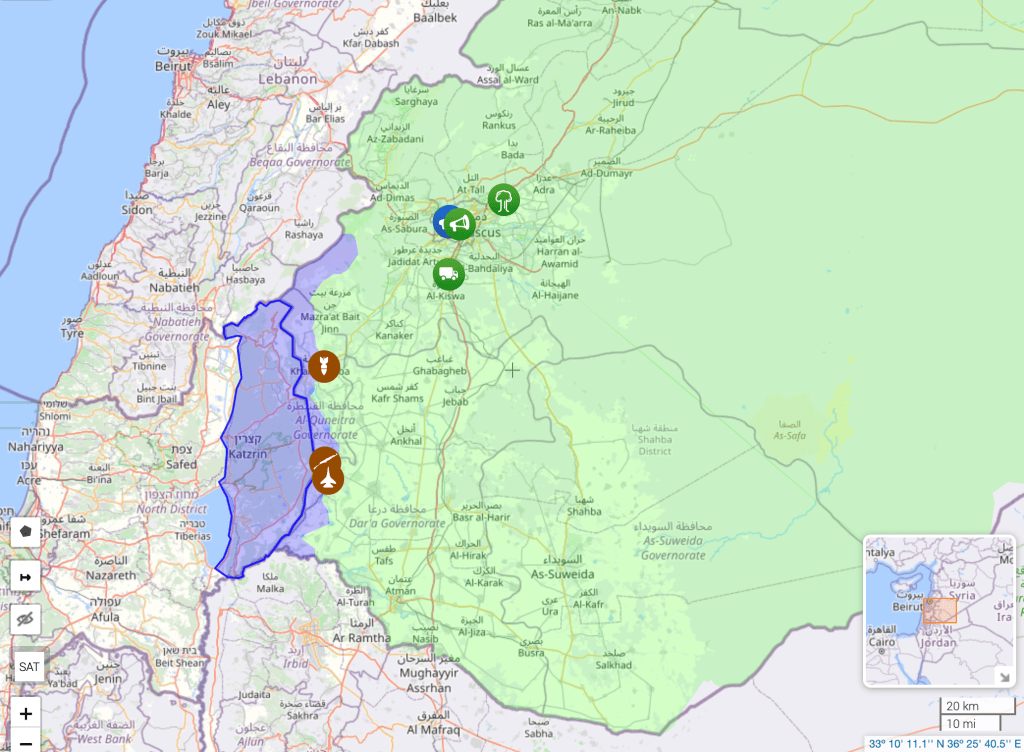
| Dec 2024 | Airstrikes on weapons storage sites | Southern Syria | Targeted suspected chemical weapons to prevent them falling into wrong hands. |
| Jan 28, 2025 | IDF to stay in buffer zone indefinitely | Golan area | Announced construction of new military outposts. |
| Feb 23, 2025 | Call for full demilitarization of southern Syria | Near Damascus | Netanyahu demands no armed factions near Israeli borders. |
| Feb 25, 2025 | Airstrikes after demilitarization demand | Kiswah, Daraa | Hit suspected military targets. |
| Mar 1, 2025 | IDF prepares to defend Druze community | Jaramana, Damascus outskirts | Responding to sectarian clashes. |
| Mar 8, 2025 | Ground raids and weapons seizure | Southern Syria | IDF claims it destroyed weapon stockpiles. |
| Mar 10, 2025 | Multiple airstrikes on military radar systems | Daraa region | No casualties reported. |
| Mar 13, 2025 | Airstrike on Islamic Jihad-linked apartment | Damascus | One Syrian civilian injured; building was allegedly empty. |
| Mar 19, 2025 | Largest ground incursion to date | Quneitra (Al-Adnaniyah) | IDF captures village with armoured units. |
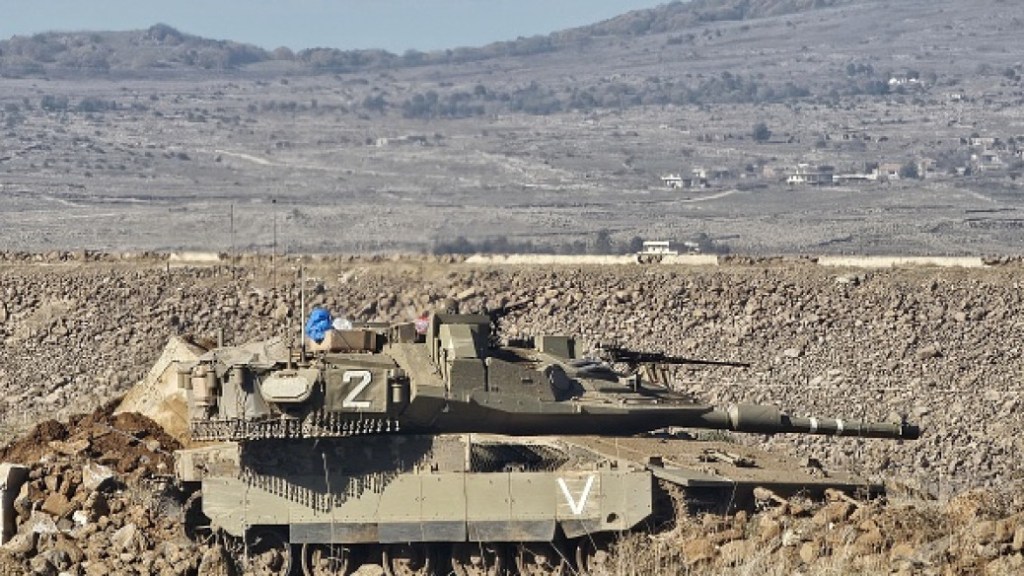
These operations have been accompanied by military construction, including roads and outposts near strategic villages like Jubata al-Khashab, indicating a long-term Israeli military presence.
Israel’s Objectives and Tactics
Israel’s military campaign seems to be driven by three core goals:
- Preventing Weapons Proliferation:
Israel is concerned that weapons from the former Assad regime—including chemical agents—could reach hostile groups like Hezbollah or radical Islamist factions. Strikes on storage facilities and radar sites aim to neutralize these threats. - Securing the Northern Border:
With Syria’s governance in flux, Israel wants to control what it sees as a security buffer. Statements by Netanyahu and the Defense Ministry emphasize keeping military actors away from the southern provinces like Daraa, Quneitra, and Suwayda. - Protecting Minority Communities:
Israel has cited the need to protect the Druze population, especially after clashes near Jaramana. However, local responses have been mixed, with some protests against Israeli intervention.
Tactics include:
- Precision airstrikes
- Special ground raids
- Permanent outpost construction
- Use of intelligence-led surveillance and drone support
Humanitarian and Environmental Fallout
While Israel claims it is targeting militants, the operations have had serious effects on ordinary Syrians:
- Casualties & Displacement:
Civilians have been injured, such as during the March 13 Damascus strike, and others have been blocked from returning to villages near IDF-controlled zones. - Environmental Damage:
Bulldozing of fruit orchards and destruction of protected green zones has harmed agriculture and ecosystems, particularly around the Golan perimeter.
Reactions: Global and Regional Backlash
🟩 Syrian Interim Government
President Ahmed al-Sharaa has condemned Israel’s operations but stopped short of declaring war. He insists on honoring the 1974 Disengagement Agreement and wants UN forces reinstated to manage the buffer zone.
🟨 United Nations & Diplomats
UN Envoy Geir Pedersen and other international actors have criticized Israel for violating Syria’s sovereignty. Calls have been made for Israeli withdrawal and respect for international law.
🟥 Regional Powers
- Turkey and Qatar labeled Israel’s actions a “dangerous escalation.”
- Saudi Arabia and Pakistan issued similar condemnations.
- Jordan raised security concerns about cross-border instability.
🟦 Russia’s Quiet Response
Moscow’s muted response is notable. Reports suggest Israel may be coordinating with the U.S. to maintain Russia’s presence at bases like Tartus, as a counterbalance to Turkish ambitions in the region.
The Bigger Picture: What’s Next?
Israel’s long-term strategy seems focused on establishing permanent control over parts of southern Syria. Defense Minister Katz’s January statement about “at least seven new outposts” directly challenges prior agreements.
This direction poses serious risks:
- Local populations could resist occupation.
- Regional tensions may flare, especially if Turkish or Iranian-backed groups respond.
- Israel may face growing diplomatic isolation if it does not engage through international channels.
A reported 5.5-mile trench built by Israel inside Syrian territory further complicates the picture, hinting at possible border redrawing by action rather than diplomacy.
Israel’s post-Assad operations in Syria reveal a security-driven but aggressive strategy aimed at shaping the region’s future borders and power dynamics. While it may succeed in deterring militant threats in the short term, the long-term costs—humanitarian, diplomatic, and regional—could be far greater.
 GeoWire
Leave a comment